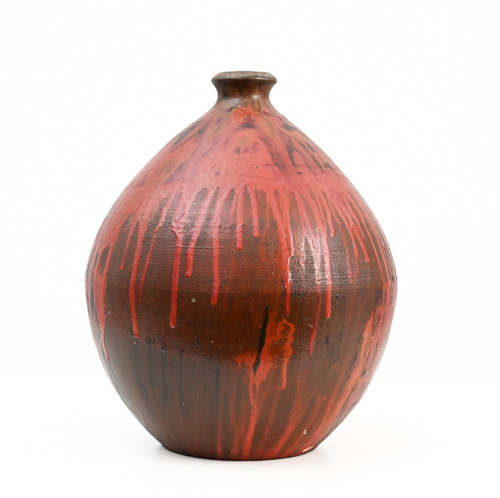
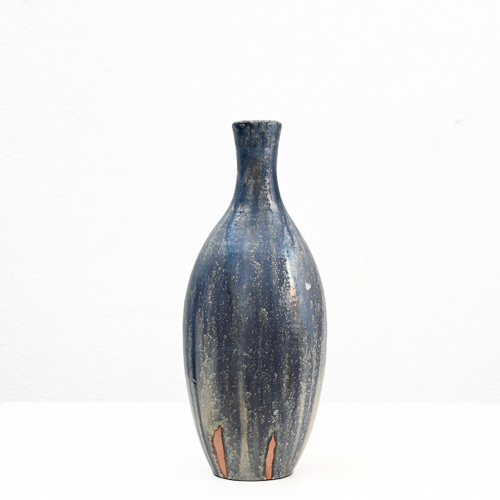
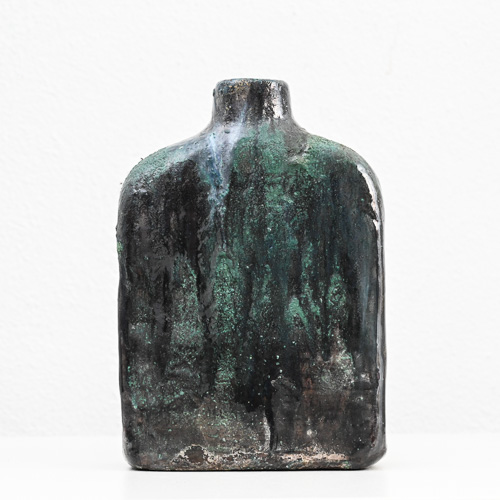
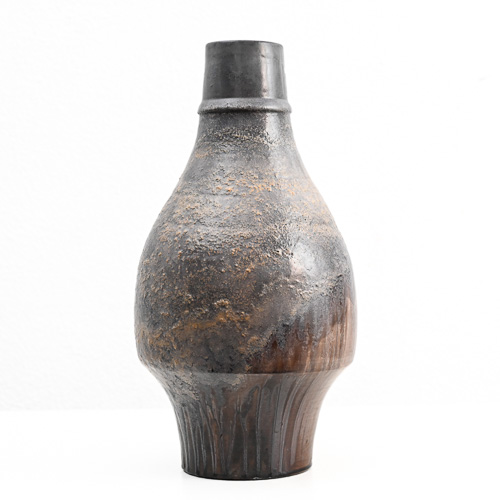
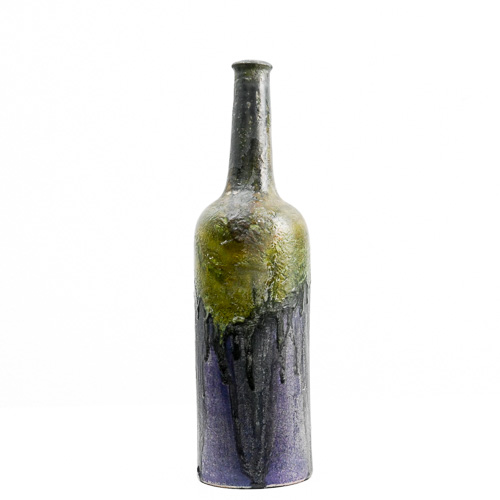
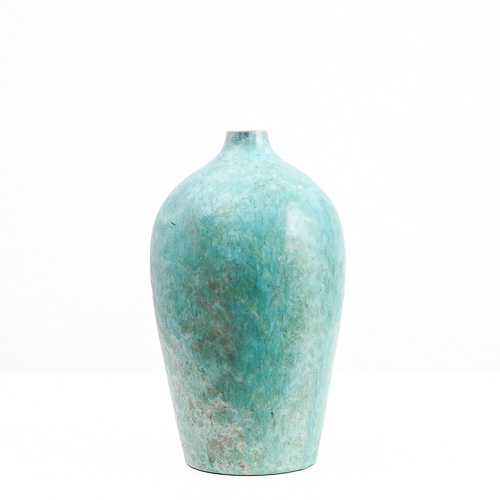
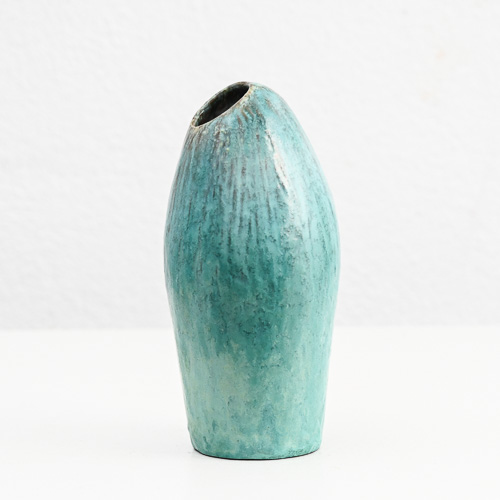
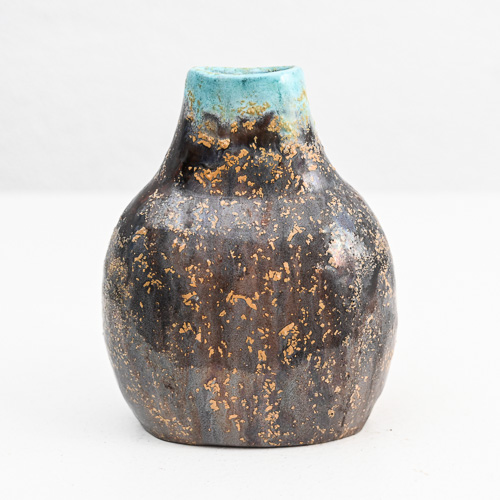
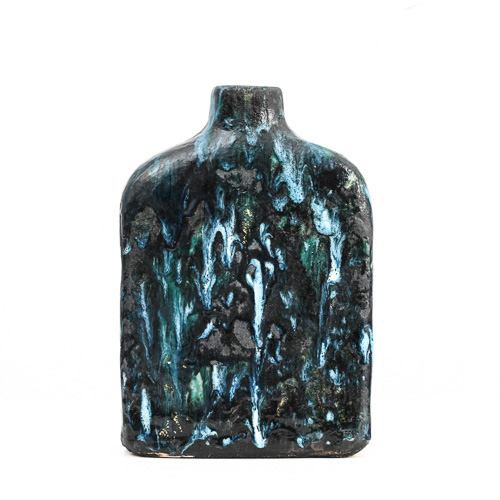
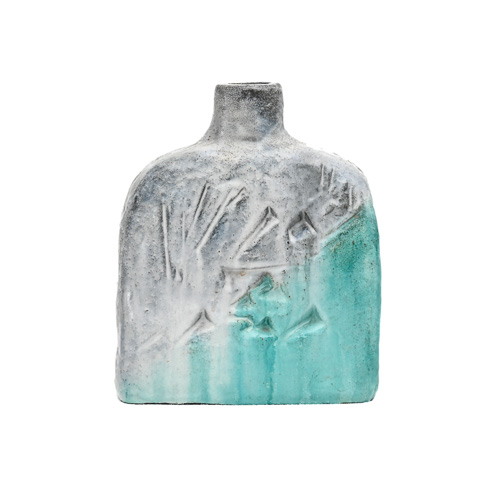
Marcello Fantoni occupies a unique position in the history of twentieth-century Italian ceramics. While many ceramic artists became associated with a single style, Fantoni spent more than seventy years constantly reinventing his work, embracing influences as diverse as Etruscan pottery, Cubism, Abstract Expressionism and Brutalism without ever losing his own distinctive artistic voice.
Today his ceramics are admired as much for their sculptural presence as their technical brilliance. Whether creating monumental slab-built vessels, deeply incised sgraffito vases, architectural wall panels or elegant table lamps, Fantoni approached clay not simply as a craft but as a medium for artistic expression. His work continues to attract collectors throughout the world and remains one of the defining achievements of post-war Italian studio ceramics.
This guide explores Marcello Fantoni’s life, artistic development and techniques, while drawing upon our own experience of handling original works over many years.
Early Life and the Florence Studio
Born in Florence on 1 October 1915, Marcello Fantoni studied at the Istituto d’Arte di Porta Romana under the ceramicist Carlo Guerrini and the sculptors Libero Andreotti and Bruno Innocenti. After graduating in 1934, he established his own studio in Florence in 1936, laying the foundations for what would become one of Italy’s most respected ceramic workshops.
Following the Second World War, Fantoni expanded the studio considerably. Alongside a team of skilled craftsmen, he produced both unique exhibition pieces and limited production works, while remaining closely involved in the artistic direction of every object that left the workshop.
Although production increased during the post-war decades, the studio never became a factory in the conventional sense. Individual decoration, glazing and finishing ensured that every piece retained its own identity.
An Artist Who Never Stood Still
One of the most remarkable aspects of Fantoni’s career is the way his work continually evolved.
Classical Influences
Fantoni’s earliest ceramics demonstrate a deep appreciation for the traditions of Italian pottery and the forms of ancient Etruscan ceramics. Balanced proportions, subtle glazing and carefully modelled surfaces reveal an artist already in complete command of his material.
Cubism and Sgraffito
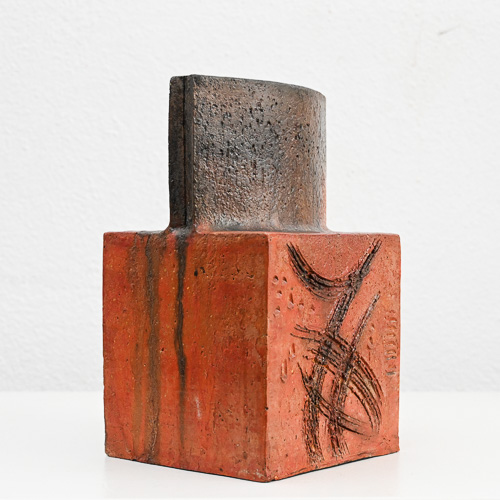
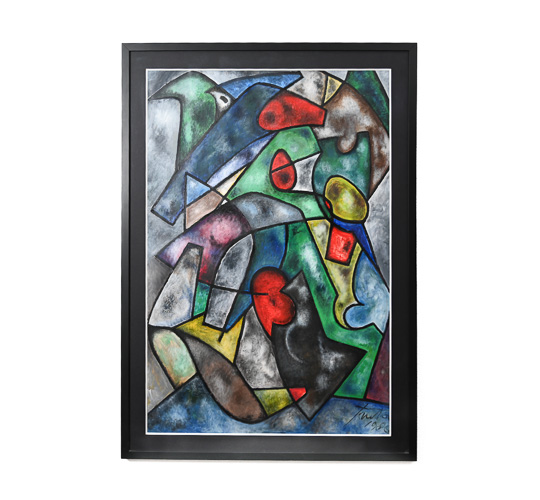
During the 1950s, Fantoni embraced Cubist ideas, creating some of his most celebrated works. Large sculptural vases became richly decorated with incised sgraffito lines, abstract figures and geometric compositions that transformed ceramic vessels into three-dimensional paintings.
Many of these pieces rank amongst the most desirable examples of his work today.
The Architectural Years
By the early 1960s Fantoni was producing increasingly bold sculptural forms. Thick slab-built ceramics, dramatic textures and powerful silhouettes reflected the optimism and architectural confidence of post-war Italy.
This period produced many of the monumental vessels and sculptural lamps that collectors most actively seek.
Refinement and Simplicity
Later works became more restrained, emphasising proportion, texture and subtle glazing rather than elaborate decoration. Even at their simplest, Fantoni’s ceramics retained a remarkable sense of balance and sculptural elegance.
Techniques
Fantoni’s reputation rests upon exceptional craftsmanship.
Working primarily in stoneware and earthenware, he combined traditional hand-building techniques with continual experimentation. Slab construction, carving, sgraffito decoration, oxide colouring and layered glazes became characteristic features of his work.
Unlike industrial ceramics, each object was individually decorated by hand. Even when produced as part of a limited series, every example possesses its own individual character.
His creativity extended beyond ceramics into sculptural lighting, architectural panels and decorative metalwork, demonstrating the breadth of his artistic interests.
Recognising Marcello Fantoni
Most collectors first encounter Fantoni through his richly decorated sculptural ceramics, but his work encompasses a remarkable variety of styles.
Typical characteristics include:
- bold sculptural forms
- deeply carved or incised decoration
- expressive use of colour
- textured glazes
- slab-built construction
- architectural silhouettes
- strong influences from sculpture and painting
Many works are signed or impressed with variations including Fantoni, Marcello Fantoni, Fantoni Italy or Florence. However, signatures alone should never be relied upon when assessing authenticity. Construction methods, glaze quality, decoration and period all contribute to the identification of genuine works.
Museum Collections and Exhibitions
Fantoni’s international reputation is reflected by the number of museums that hold examples of his work, including the Museum of Modern Art and the Metropolitan Museum of Art in New York, the Victoria and Albert Museum in London, the Museum of Fine Arts, Boston, the International Museum of Ceramics in Faenza and several important museums in Florence and Japan.
Major retrospective exhibitions have celebrated his career in Florence and Fiesole, recognising both his technical mastery and his extraordinary contribution to twentieth-century Italian decorative arts.
Publications
Among the most useful references for collectors are:
- Marcello Fantoni: Ceramista in Firenze dal 1929 by Antonio Paolucci.
- Marcello Fantoni – Ceramica come Arte (Octavo).
- Exhibition catalogues from the Museo Archeologico di Fiesole and Palazzo Medici Riccardi.
These publications provide valuable insight into the development of Fantoni’s career and remain essential references for collectors.
What Collectors Look For
One of the pleasures of collecting Marcello Fantoni is the extraordinary diversity of his work.
Some collectors are drawn to the dramatic slab-built vessels of the 1960s, while others prefer the earlier Cubist ceramics or the elegant sculptural lamps produced during the post-war decades. Large exhibition pieces remain comparatively scarce and command significant interest, but even smaller works display the imagination and technical quality that define Fantoni’s career.
As with all important studio ceramics, originality, condition, glaze quality and documented provenance play an important role in determining desirability.
Marcello Fantoni at 3details
Marcello Fantoni has been a specialist interests for many years.
Over the course of the last decade we have handled over one hundred original works, ranging from early ceramics to monumental sculptural vessels and lamps. Many were acquired directly from the Fantoni family following the closure of the Florence studio, providing a rare opportunity to study the artist’s work at first hand.
Our archive reflects not only the breadth of Fantoni’s remarkable career but also the evolution of his artistic ideas across more than seventy years. We continue to seek exceptional examples for collectors who share our admiration for one of Italy’s greatest ceramic artists.
If you would like to browse original Marcello Fantoni works currently available, or explore previously sold examples from our archive, please visit our Marcello Fantoni collection.
Some of the Marcello Fantoni items currently on 3details.com: